


A colored ceramic coffee mug made the right way isn't paint on a cup — it's glass fused into the ceramic at 2200°F. That's why handmade glazed mugs stay vivid for a decade while painted factory mugs fade, chip, or peel within a year. This guide covers six handmade colors worth choosing — terracotta orange, coral pink, sage green, cobalt blue, seafoam green, and multicolor — plus how handmade glaze actually works and how to pick a shade you'll still want to reach for in five years.
Six Handmade Colors — Cheralle Wave Series
Every Wave Series mug is thrown on the wheel in Jingdezhen, glazed by hand, and fired at over 2200°F for a glass-bonded surface that won't fade, chip, or wash off. All six are 8oz, $99, and dishwasher-safe. Each color is a one-of-one — glaze variation is part of the piece.

Orange
#C85A2BWarm without being loud. Pairs with wooden countertops, linen, off-white walls. For slow morning drinkers who want a lift, not a jolt.
Shop Orange →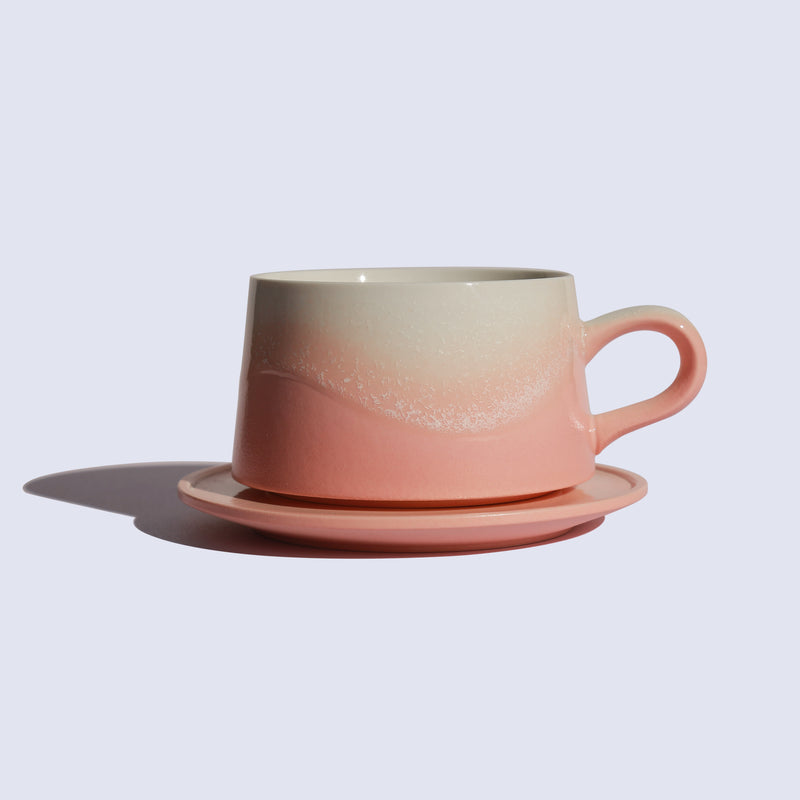
Pink
#E9A3A0Softness without sweetness. Handmade pinks have depth factory pinks can't match — temperature swings in the kiln shift each one. For warm-palette kitchens.
Shop Pink →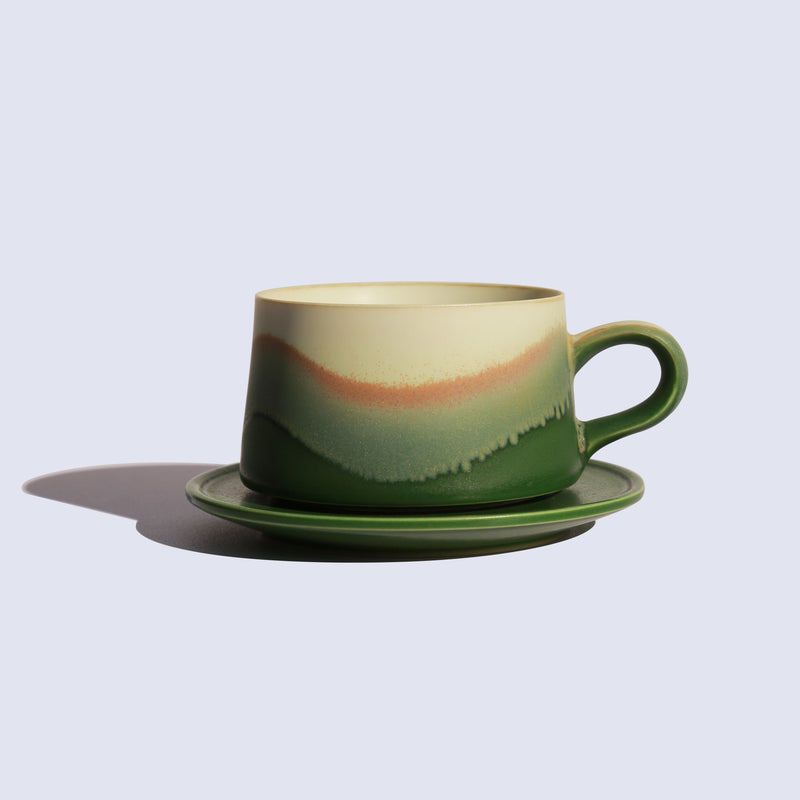
Green
#6B8A6AThe quietest color in the palette. Works with almost any existing palette. For people who read while they drink, and want the cup to recede.
Shop Green →
Blue
#3B5E85Cobalt oxide has held color in Chinese porcelain for 700 years. Reads as focused without feeling cold. For desks, reading nooks, home offices.
Shop Blue →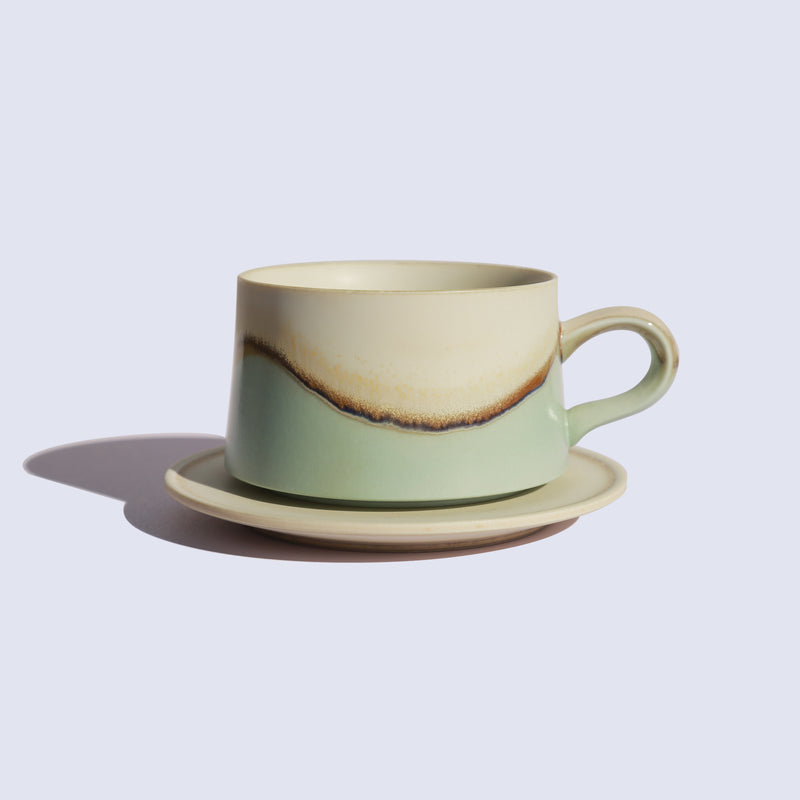
Pastel Green
#B5D3C2Shifts in different light — cooler in sun, warmer under lamps. Pairs with pastels and warm metals. For counters the cup stays visible on.
Shop Pastel Green →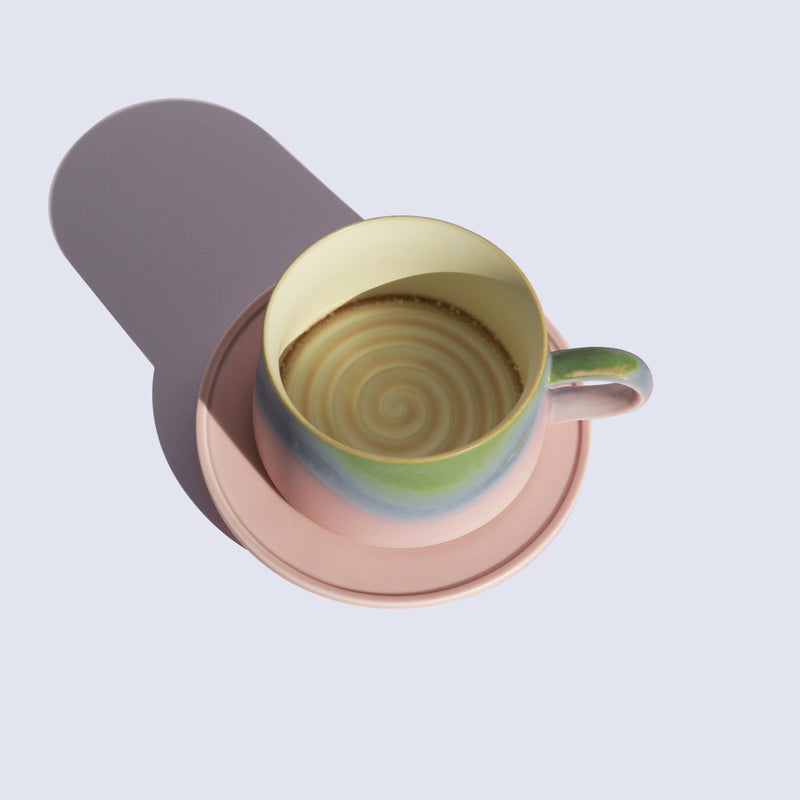
Multicolor
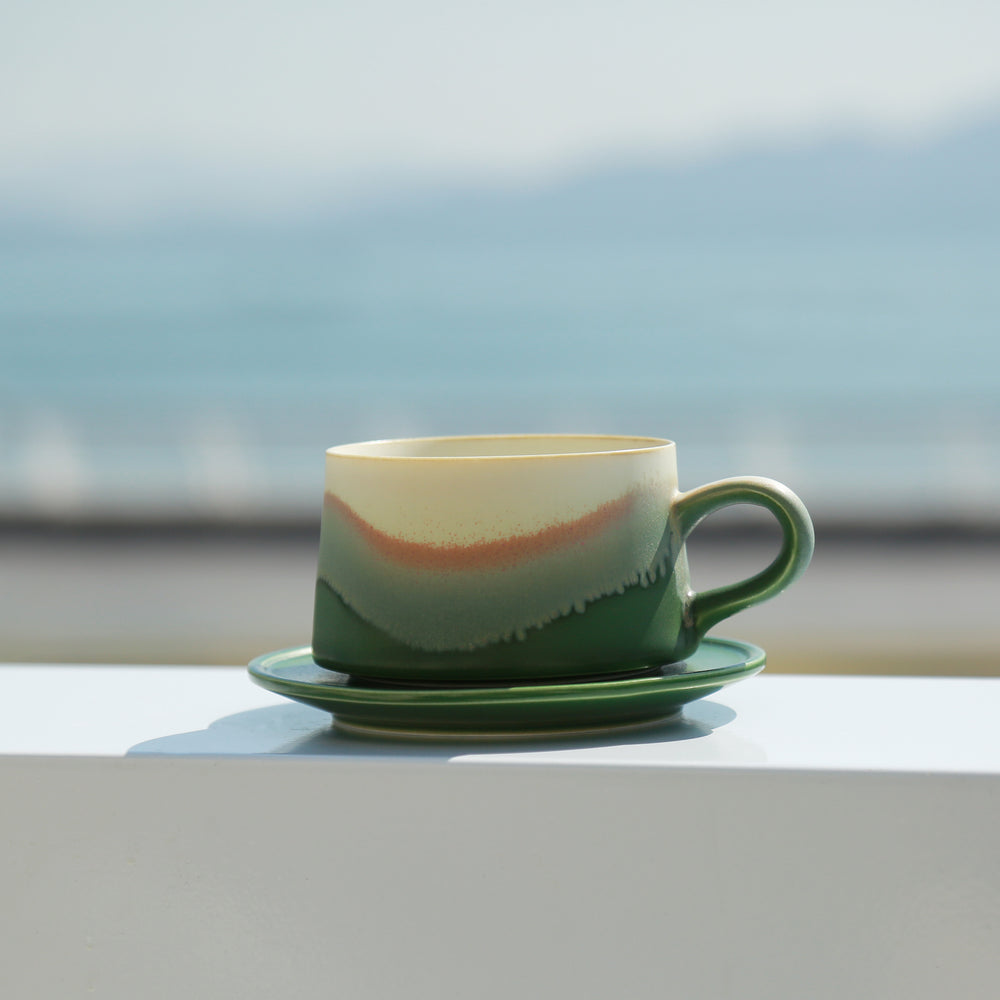
MultiThe hardest to make — each glaze is a separate recipe with its own firing behavior. For people who want the cup itself to be the visual anchor.
Shop Multicolor →Why Handmade Glaze Color Looks Different From Factory Paint
There's a reason your eye can tell a handmade glazed mug from a painted factory one at ten feet. Factory mugs use screen printing, decal transfer, or low-fired underglaze — a thin color layer sitting on the surface that can dull, chip, or crack in the dishwasher. Handmade high-fired glazes are the opposite: a liquid suspension of mineral oxides (iron, copper, cobalt, manganese) mixed with silica, fired at 2200°F or above. The silica melts into a glass coating and the oxides react chemically with heat, atmosphere, and clay body.
Three consequences when you're choosing a mug:
- Depth. Light refracts through the top glaze layer and reflects off the clay underneath. That's the "alive" quality factory mugs can't fake.
- Variation. Because color is a chemical reaction, no two mugs come out identical. A batch of six "green" mugs will have six slightly different greens — same recipe, different kiln position.
- Permanence. Glaze won't fade, wash off, or peel. A handmade colored mug fired properly looks the same in ten years as it did new — apart from the patina from your hands, which is a different kind of aging.
Choosing a Color You'll Still Want in Five Years
Color trends cycle every 18 months. A good ceramic mug lasts ten years. Skip trend colors and pick the shade you'd wear as a sweater — something that fits your existing home palette and feels like you. Some practical guidance:
- Match your kitchen's warm/cool tone. Wood countertops and brass hardware read warm — orange, pink, pastel green pair best. White marble and chrome read cool — blue and sage green sit more naturally.
- Ask how often you'll see it. A mug that lives on an open counter deserves a color you enjoy looking at; a mug that lives in the cabinet between uses can be bolder.
- Trust handmade variation. Even classic colors like terracotta, sage, cobalt, and coral stay interesting over years because each piece has its own subtle tonal shifts — factory uniformity is what makes standard mugs boring.
How Cheralle's Colors Are Made
Every Cheralle glaze starts in Jingdezhen, the town in southern China that has made ceramics continuously for a thousand years. A single color takes months of development — glaze chemists test dozens of oxide combinations on small tiles, then reformulate for the actual cup geometry (glazes behave differently on thrown clay than on flat tests). Pieces that land outside the studio's tolerance range for hue, saturation, or surface go to seconds or get reglazed. The Wave Series palette is the set of colors that survived that process.
How Handmade Color Ages
Factory-painted mugs fade uniformly and look worn. Handmade high-fired glaze ages differently — the glass surface develops micro-scratches that soften how it catches light, coffee oils can build a thin patina on lighter glazes (hand-washing removes it), and the unglazed foot ring takes on a dark ring from countertops. None of this is damage. It's what a well-loved object looks like after a year of daily coffee. A handmade colored mug five years in looks better than it did new — the opposite of how factory mugs behave.
Still asking yourself whether a $99 handmade mug is worth it over a $10 mass-produced one?
We broke down 7 measurable differences between handmade and mass-produced coffee mugs — weight, foot ring, glaze chemistry, firing temperature, and 10-year aging — each one you can see, feel, or test yourself. Read the full Handmade vs Mass-Produced Coffee Mug comparison guide →
Colored Ceramic Mug FAQ
Q: Do colored ceramic mugs fade over time?
A: High-fired glazed mugs (2200°F or above) don't fade — the color is fused glass, not paint. Low-fired or painted mugs can fade from dishwasher cycles and sun exposure. Check firing temperature before buying.
Q: Are all ceramic glaze colors food-safe?
A: Not automatically. Reputable makers use lead-free and cadmium-free glazes, but some bright reds, oranges, and yellows historically used heavy metals. Buy from makers who state their glazes are food-safe. All Cheralle glazes are certified lead-free and cadmium-free.
Q: What's the difference between glaze color and painted color?
A: Glaze color is a glass-like layer fused to the clay at high temperature — permanent and part of the cup. Painted color sits on top and can chip, peel, or wash off. Handmade ceramic mugs almost always use glaze; mass-produced mugs often use printed or painted decoration.
Q: Can I put colored ceramic mugs in the dishwasher?
A: Yes, if they're high-fired and glaze-finished. The glaze is chemically bonded and won't be affected by dishwasher detergent or heat. Avoid dishwashing mugs with metallic accents.
Q: Why are no two handmade colored mugs exactly the same?
A: Glaze color is a chemical reaction. Mineral oxides respond to heat, atmosphere, and kiln position. Even mugs glazed from the same batch come out with subtle differences. This is a feature, not a flaw.
Q: How do I choose a color that won't feel dated in a year?
A: Skip trend colors. Pick the shade you'd wear as a sweater. Classic handmade colors — terracotta, sage, cobalt, coral — stay interesting over years because each piece has natural tonal variation.
Q: Are colored ceramic mugs microwave safe?
A: High-fired glazed ceramics are microwave safe. The exception is any mug with metallic decoration. All Cheralle Wave Series colored mugs are microwave and fridge safe.
Browse the full Wave Series collection →

CHERALLE
https://www.cheralle.comCheralle is a modern handcrafted ceramic drinkware brand dedicated to celebrating the artistry of everyday rituals. Every cup tells a story—from the clay’s origin to the final firing. Our signature handmade mugs are crafted through a meticulous 16-step process that ensures uniqueness, durability, and timeless elegance. Cheralle is more than a mug—it's your daily dose of calm and character.


